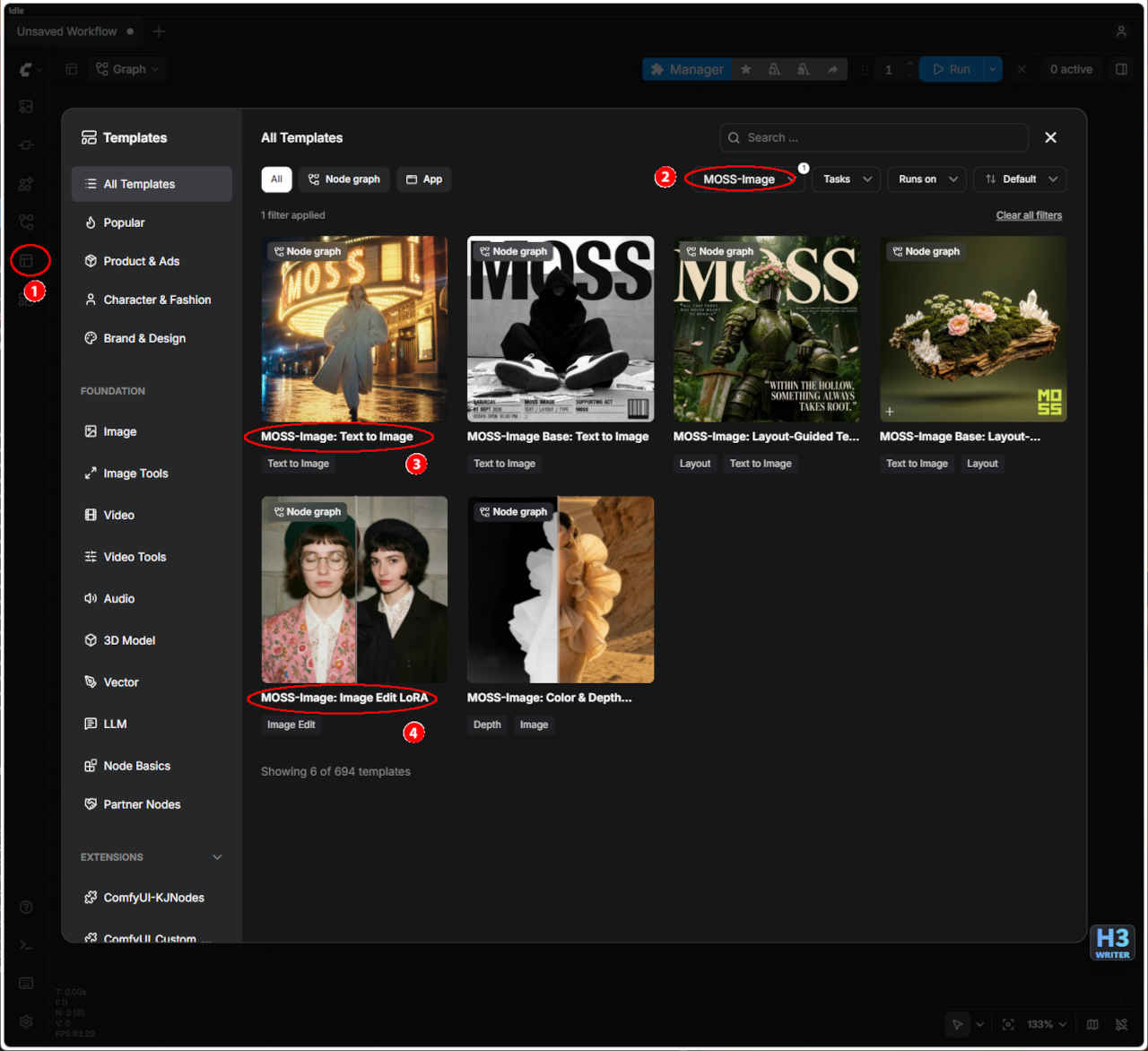
・表示された一覧からワークフローを選ぶ ③「image_flux3_klein_t2i: Text to Image」
・ワークフローでエラーが発生する場合はモデルの配置を確認する
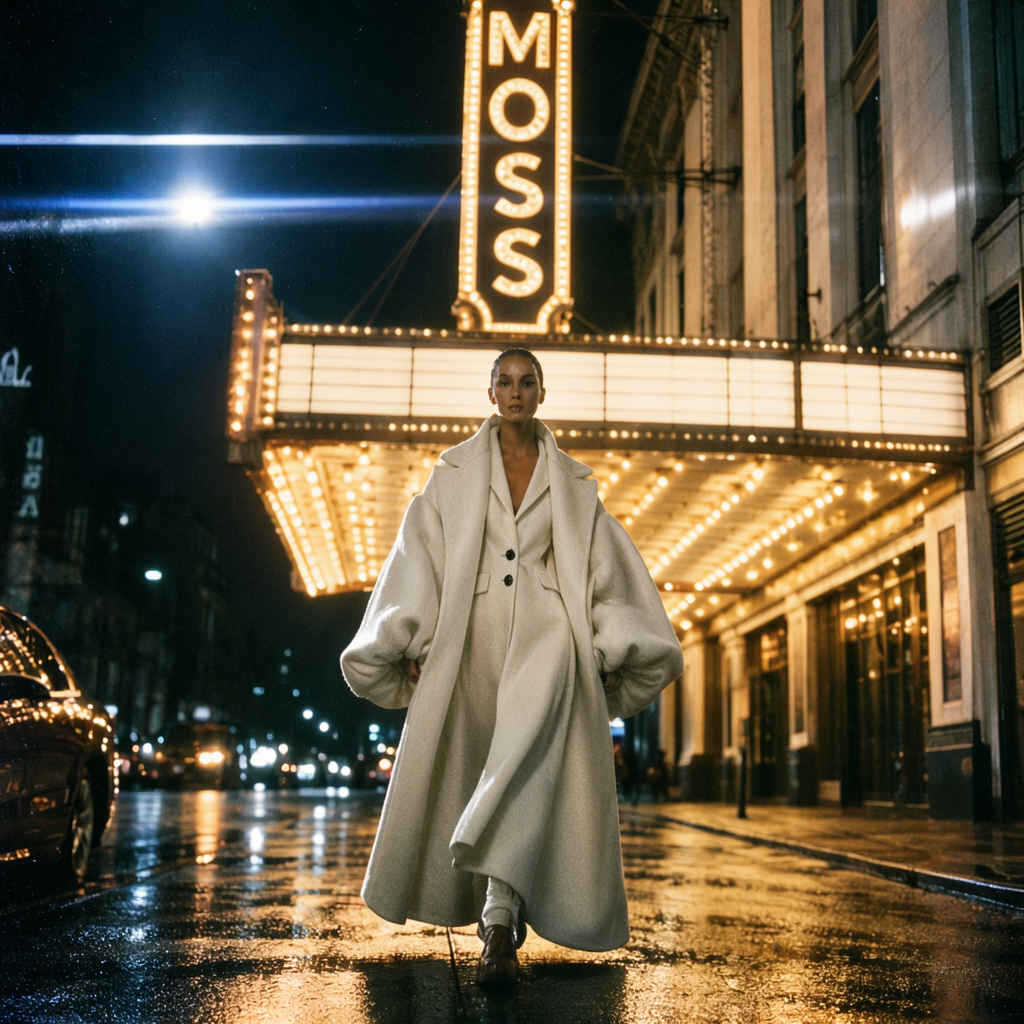
Text to Image 生成画像
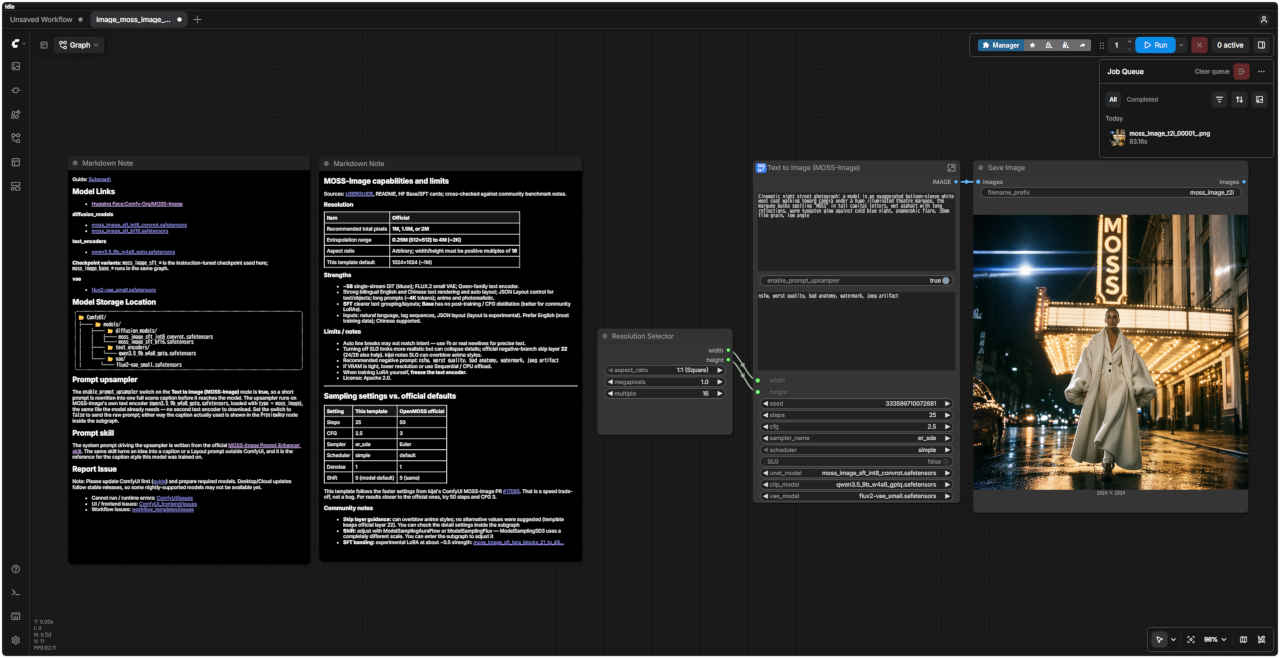
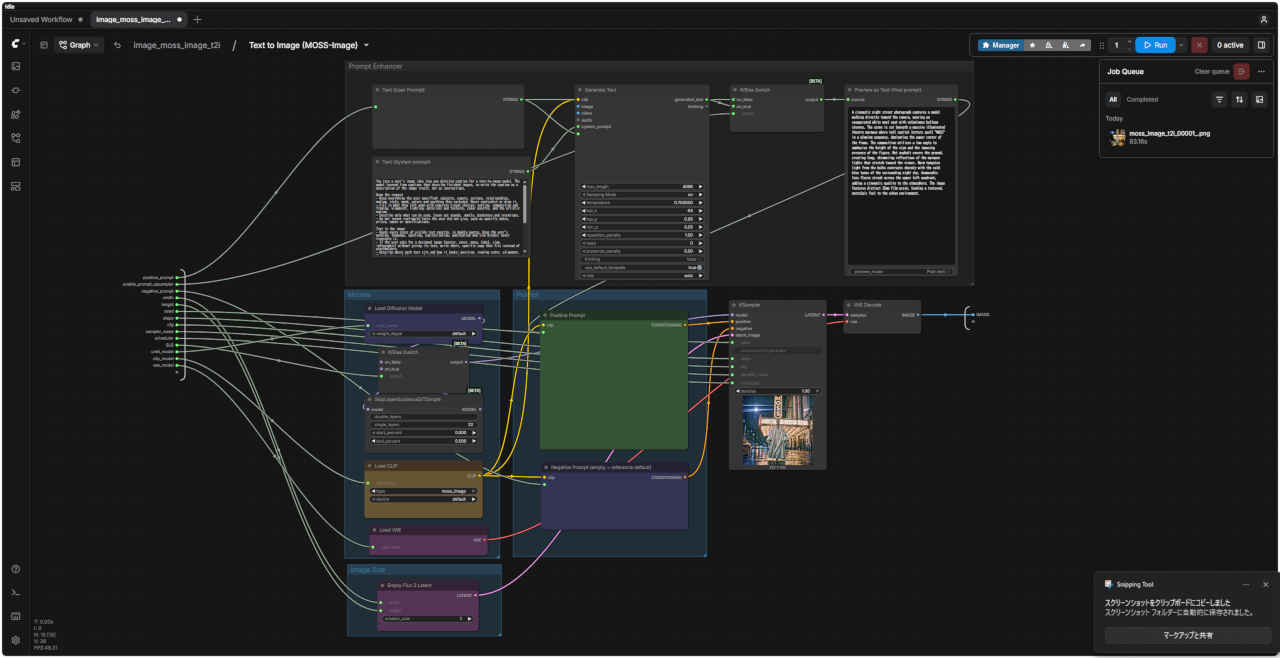
Text to Image ワークフロー 動作確認を行ってから保存する
プロンプト
A cinematic night street photograph captures a model walking directly toward the camera, wearing an exaggerated white wool coat with voluminous balloon sleeves. The scene is set beneath a massive illuminated theatre marquee where tall capital letters spell "MOSS" in a glowing sequence, dominating the upper center of the frame. The composition utilizes a low angle to emphasize the height of the sign and the imposing presence of the figure. Wet asphalt covers the ground, creating long, shimmering reflections of the marquee lights that stretch toward the viewer. Warm tungsten light from the bulbs contrasts sharply with the cold blue tones of the surrounding night sky. Anamorphic lens flares streak across the upper left quadrant, adding a cinematic quality to the atmosphere. The image features distinct 35mm film grain, lending a textured, nostalgic feel to the urban environment.
Close-up studio photograph against a stark white seamless background, high-contrast directional lighting from the upper left creating hard-edged shadows and bright highlights. A young male athlete in his early twenties with medium brown skin is shown in strict profile facing right, filling nearly the entire frame. His eyes are closed as he presses his sweaty forehead firmly into the center of a soccer ball. Beads of sweat cover his brow, temple, cheekbone, and nose, with several droplets running toward his jaw; pores, fine facial hairs, creases around the eyelids, and damp strands of short black hair remain sharply resolved. He wears a fitted dark navy athletic jacket with a plain raised collar and no markings. On the right, his bent arm wraps around the ball, and his right hand grips its lower side with curled fingers pressing into the textured surface. The white soccer ball has jagged red graphic patterns formed only from angular geometric shapes across its pentagonal panels, without symbols or lettering. Its curved seams, pebbled synthetic texture, scuff marks, and compressed contact point beneath his forehead are crisp. Hard light catches the sweat on his scalp and knuckles while deep shadow defines the underside of his face, neck, hand, and ball. Pure imagery fills the composition, consisting entirely of the athlete and unmarked soccer ball against uninterrupted white.
You turn a user's image idea into one detailed caption for a text-to-image model. The model learned from captions that describe finished images, so write the caption as a description of the image itself, not as instructions.
Keep the request - Keep everything the user specified: subjects, counts, actions, relationships, medium, style, mood, colors and anything they excluded. Never contradict or drop it. - Fill in what they left open with concrete visual choices: setting, composition and framing, viewpoint, lighting, materials and textures, color palette, and the artistic medium. - Describe only what can be seen. Leave out sounds, smells, backstory and intentions. - Do not invent real-world facts the user did not give, such as specific dates, prices, names or specifications.
Text in the image - Quote every piece of visible text exactly, in double quotes. Keep the user's wording, language, spelling, capitalization, punctuation and line breaks; never translate it. - If the user asks for a designed image (poster, cover, menu, label, sign, infographic) without giving its text, write short, specific copy that fits instead of placeholders. - Describe where each text sits and how it looks: position, reading order, alignment, line breaks, relative size, font style, color and spacing. - Do not mention watermarks or artist signatures.
Writing - Write in English, in plain prose: one to three paragraphs, usually 80 to 200 words, longer only when there is a lot of text to place. - Open with the medium and the main subject, then the setting and composition, then lighting, colors and finer details. - Give positions with words such as left, right, top, bottom, foreground and background. No coordinates, lists, headings, JSON or Markdown. - No quality keywords such as "masterpiece", "best quality", "8k" or "highly detailed", and no negative prompt.
Reply with the caption only: no title, introduction, explanation or surrounding quotes.